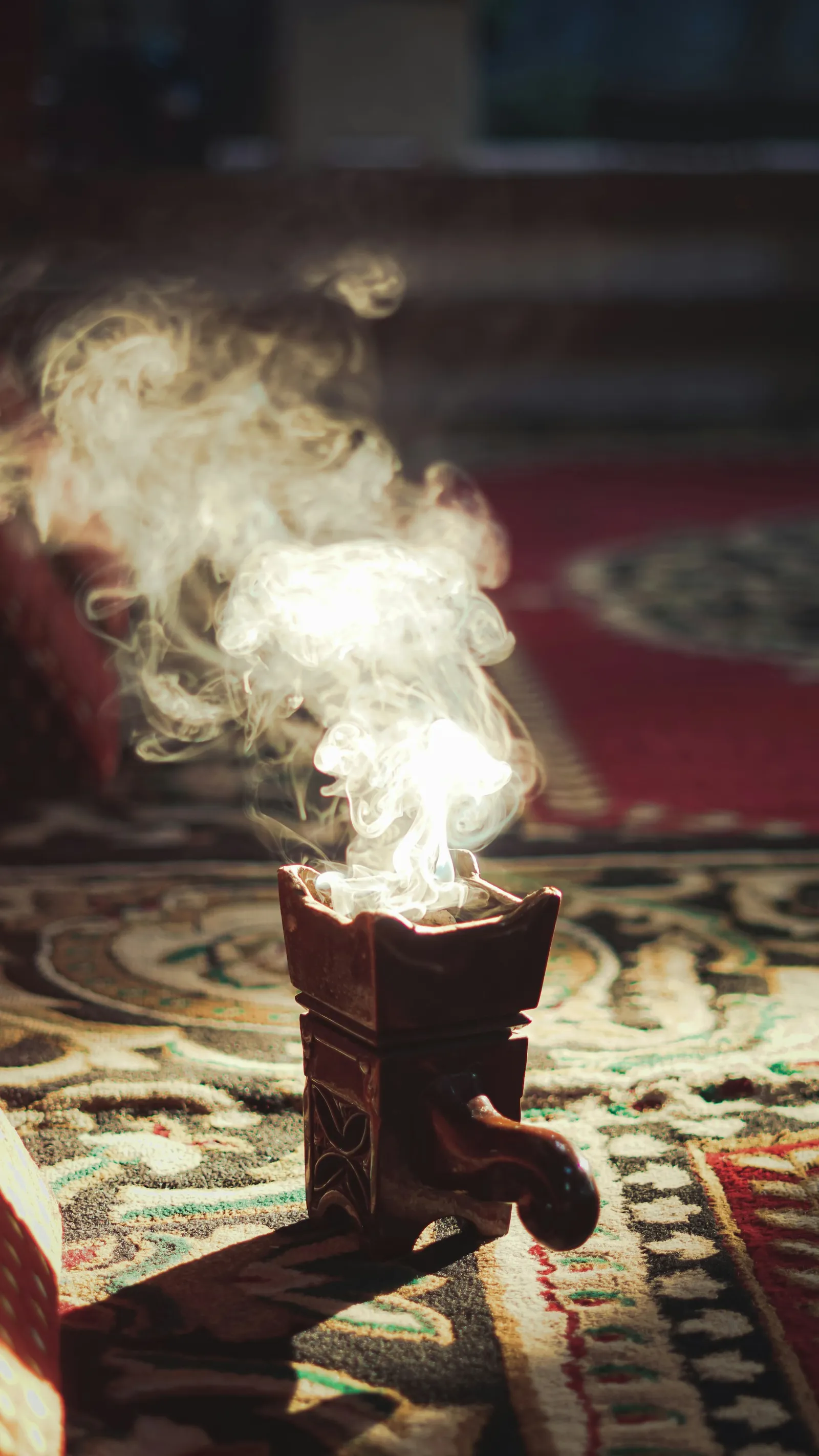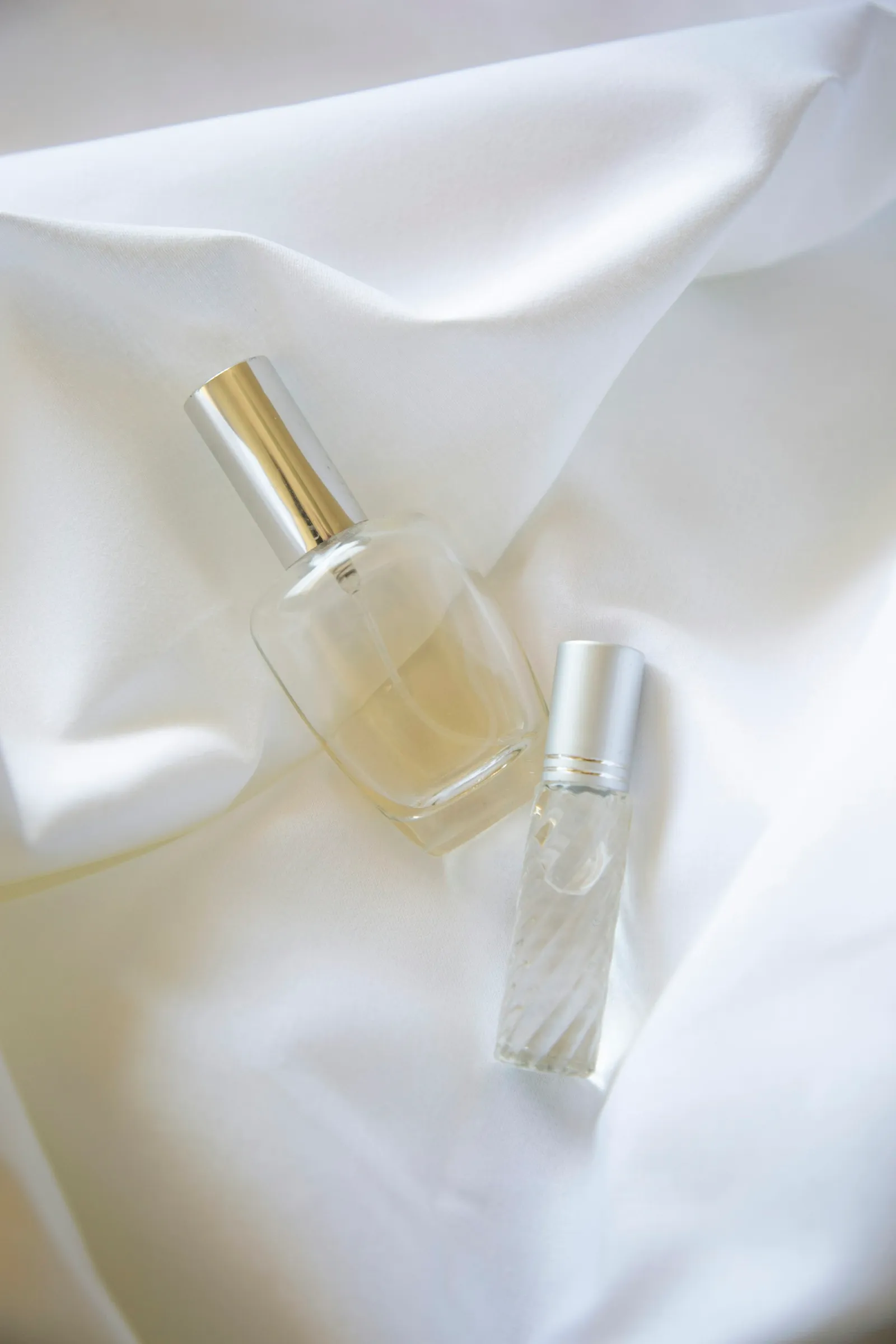


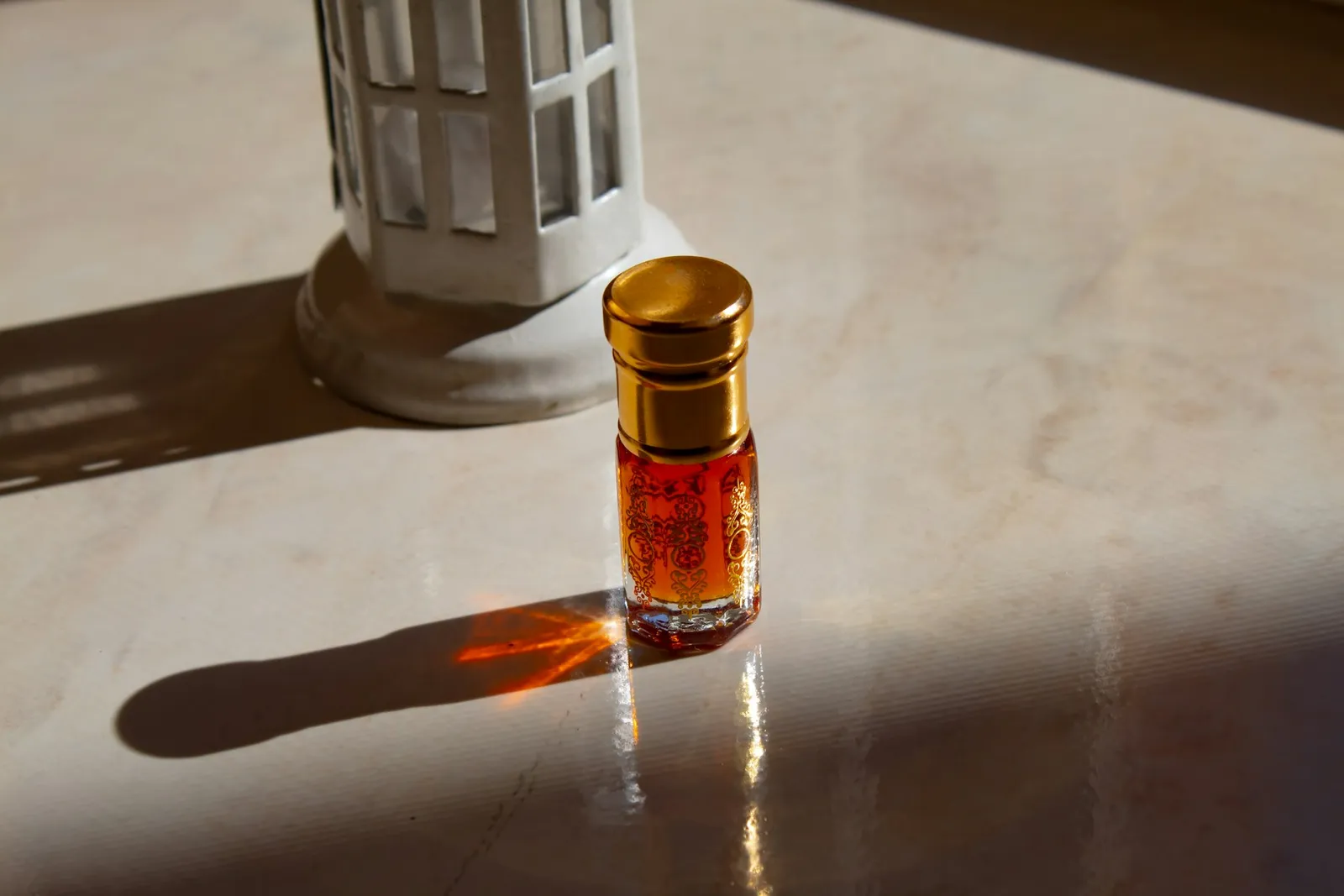
Long before perfume came in spray bottles, it came as oil. Attar — from the Persian atr, meaning fragrance — is perfume in its most ancient and concentrated form.
Deg and bhapka
In Kannauj, on the banks of the Ganges, perfumers still distil attars much as they did four centuries ago. Flowers are packed into a copper still called a deg and heated over a wood fire. The fragrant steam travels through a bamboo pipe into a bhapka, a receiving vessel filled with sandalwood oil, which slowly absorbs the scent. It can take weeks to make a single batch.
Why attars last so long
Attars contain no alcohol. Instead of evaporating quickly, the oil bonds to the skin and releases its scent slowly over many hours. A single swipe is often enough for the whole day.
How to wear attar
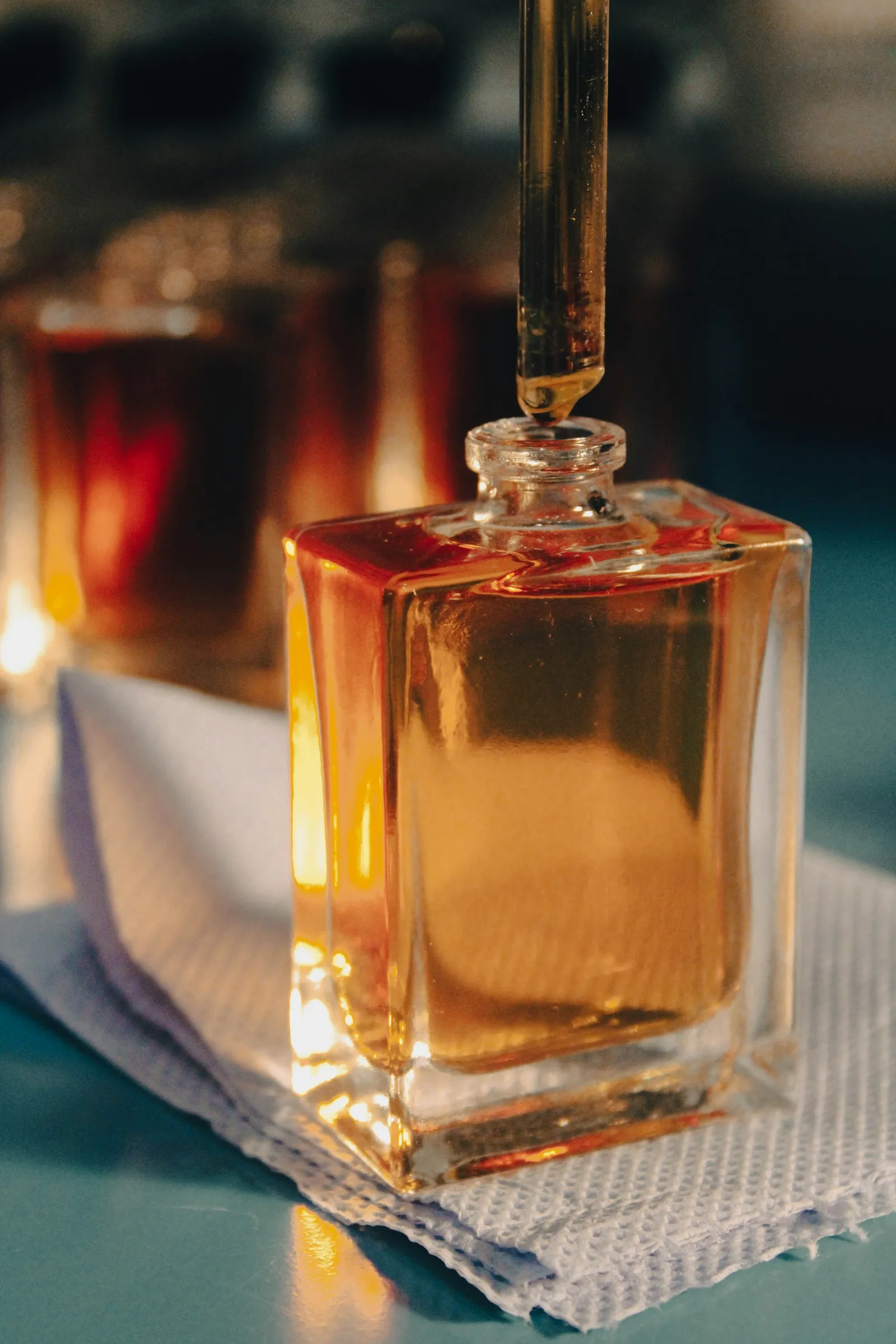
Glide the glass wand over the wrists, behind the ears, on the beard or along a collar. Do not rub — let the oil warm on the skin. In the Gulf it is traditional to layer an attar beneath a spray perfume to give it depth and staying power.
A living tradition
At Aayat al-Ruh we work with families of distillers whose craft has been handed down for generations. Every attar we offer is a small act of preservation — of a technique, a landscape and a way of life.